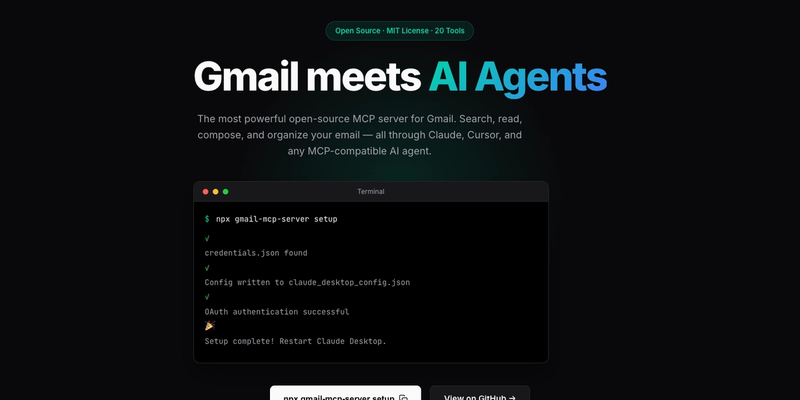
Building a Gmail MCP Server for Autonomous AI Workflows
Most email integrations are built for dashboards or internal automations. AI agents need something different: structured tools, safe bulk actions, local credentials, and setup that normal developers can actually finish without a long manual.
What I built
- A local Gmail MCP server with search, read, send, reply, draft, label, and bulk actions.
- A setup flow that helps users configure supported clients without hand-editing multiple JSON files.
- Tool coverage for real inbox work such as contact extraction, batch modification, and profile inspection.
- A privacy-first architecture where credentials and tokens stay on the user's machine.
Technical decisions
- Used a domain-driven structure so search, compose, organize, and profile actions stay isolated and easier to extend.
- Made dry-run and batch-friendly workflows first-class because agent integrations need safer execution boundaries.
- Focused on typed inputs and outputs so MCP clients can use the server reliably instead of treating Gmail as unstructured text.
Why this project matters
- It shows backend API design with a practical AI-agent use case rather than a speculative demo.
- It demonstrates judgment around privacy, authentication, and tool safety.
- It is strong evidence that I can work at the boundary between product engineering and agent tooling.
Links
- GitHub: https://github.com/neutral-Stage/gmail-mcp-server
- Live URL: https://neutral-stage.github.io/gmail-mcp-server/
- Repository topics: ai, ai-agent, automation, claude, cursor, gmail, mcp, model-context-protocol
- Primary language: TypeScript
Takeaway
This project reflects the kind of work I enjoy most: shipping practical software, tightening the developer or user workflow, and documenting the technical decisions clearly enough that another engineer can pick it up and keep moving.